
Gonzales County Sex Offender Checks
The Texas Public Sex Offender Registry is the primary public source for Gonzales County. Texas DPS receives registration data from local law enforcement and lets a reader search by person or place. The county sheriff also maintains a local entry point, but the sheriff warns that its list is incomplete and that an address may contain an error. That warning makes the statewide system the sound first stop. Use the local list as a second view and as a route to the Gonzales County registration office.
Begin with the facts already known. A full or partial name may find aliases and similar names. An address, city, ZIP code, county filter, or radius is more useful for community awareness around a place. Open the official profile before drawing a conclusion. Compare the photograph, aliases, physical details, reportable offense, address type, and verification date. A shared name alone does not establish that a result is the person sought.
Gonzales County Registry Limits
Gonzales County provides a useful local doorway, yet it does not claim to be a full copy of the state system. The sheriff's sex-offender page presents its own disclaimer and acceptance screen before the county list. That notice matters because registration data can move between a police department, the sheriff, and DPS as a person changes residence or reports an update.
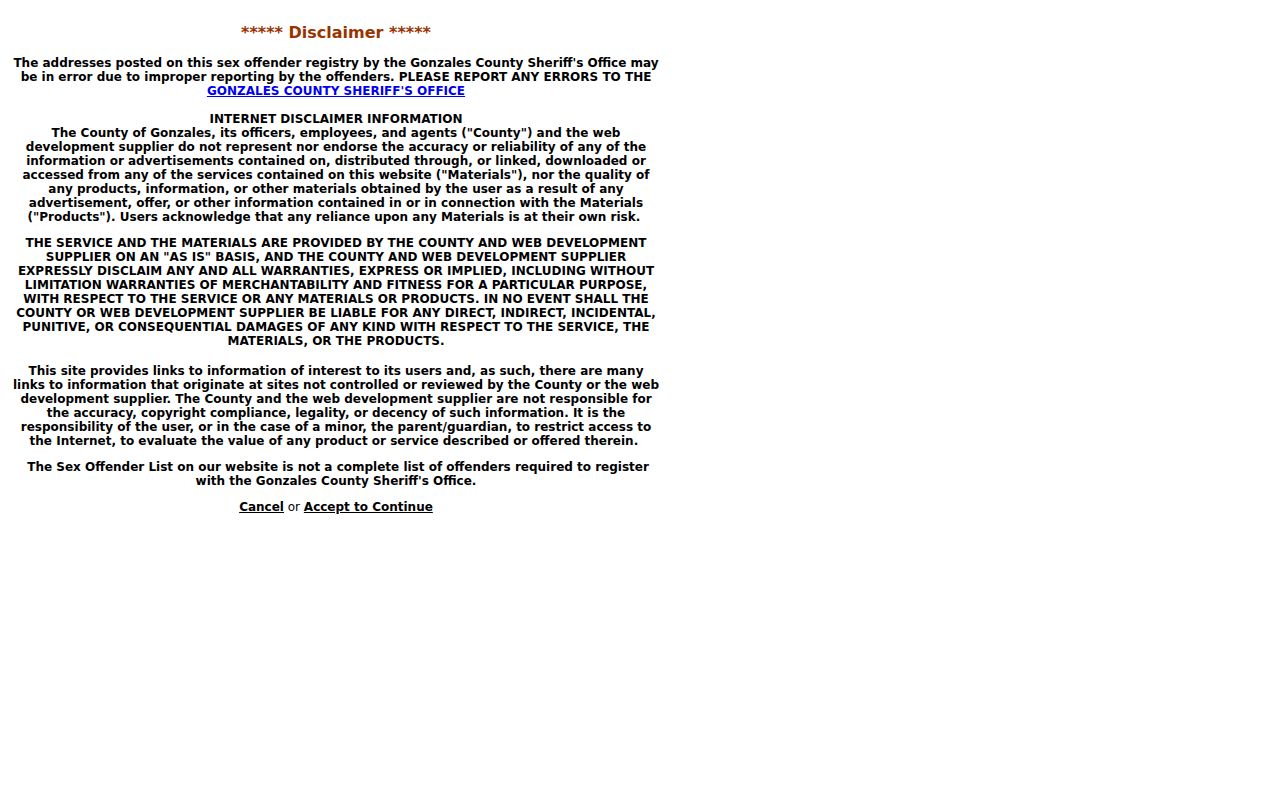
The county screen reinforces a practical rule: search DPS first, check the local view second, and call the registering authority when a material detail conflicts. A missing local result does not cancel a statewide profile. Likewise, a listed address should not be treated as flawless when the sheriff expressly cautions that errors can occur. The most recent verification date and the authority shown on the profile provide a better path for follow-up than assumption.
Note: A local-list omission does not prove that no registrant lives in the searched area.
Texas Public Sex Offender Registry Searches
DPS offers several ways to search Gonzales County registry information. A name route works when identity is known. The location route works for an address, city, county, or ZIP code, and the current interface also provides map and list controls. Combining name and geography cuts down on false assumptions, especially when a person uses an alias or when two people share a name.
- Open the DPS registry and read its conditions of use before entering search terms.
- Enter a name, or choose a location route with Gonzales County, a city, ZIP code, or street address.
- Review the list or map and compare more than one identifier, including aliases and physical details.
- Open the full profile, note its verification and status fields, then contact the listed local authority about a meaningful discrepancy.
| Field Label | Type | Required | Notes |
|---|---|---|---|
| Last Name | Text | Conditional | Use with first name when possible. |
| First / Middle Name | Text | No | Helps narrow aliases and similar names. |
| Address | Text | Conditional | Supports a place or radius search. |
| City / County | Text or dropdown | No | Select Gonzales County or a city within it. |
| ZIP Code / Radius | Text or dropdown | No | Limits the geographic result set. |
| Map / List View | Control | No | Switches between geographic and list results. |
The DPS search interface shows these name and location routes in one official system.
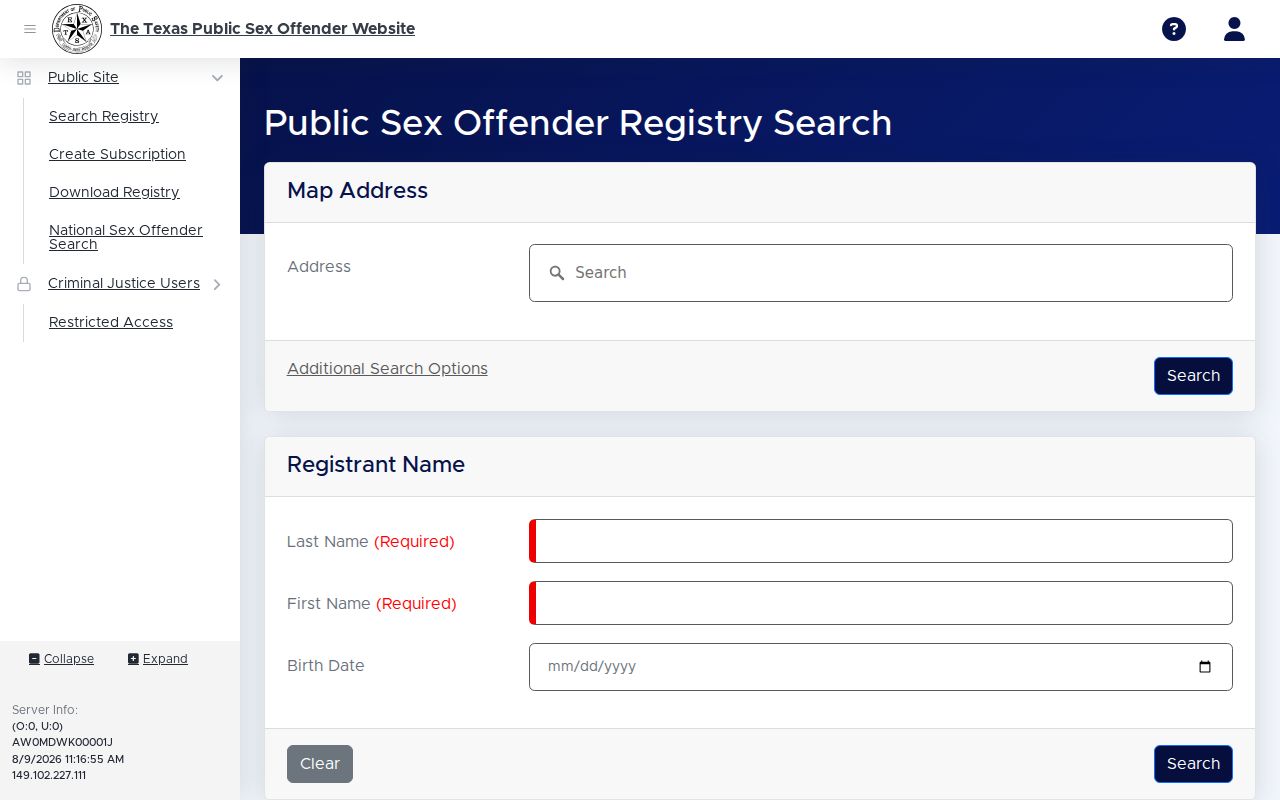
The captured interface helps a Gonzales County reader choose a search mode before opening any profile. It also makes clear why a county-only filter and a street-radius search answer different questions.
Where Gonzales County Registrants Report
Texas divides local registration work by residence. A person who lives inside a municipality generally registers with the police chief's office. Someone living outside a city generally reports to the sheriff. In Gonzales County, that means an address within Gonzales, Nixon, or Smiley may call for city-police follow-up, while an unincorporated address belongs with the Gonzales County Sheriff's Office. DPS remains the statewide publisher, but the local authority collects and checks the underlying report.
The sheriff identifies a Sex Offender Compliance contact through its administration directory. For suspected noncompliance outside a municipality, call the sheriff's main line at 830-672-6524. For an address inside a city, contact that police department and DPS as appropriate. Describe the specific issue, such as an apparent address conflict or status concern. Do not confront the person listed. Law enforcement can compare the public display with the nonpublic registration material it is allowed to hold.
Registry Profiles: What They Show
A Texas profile joins identity, appearance, location, offense, and registration information. Read the whole profile rather than treating the map pin or name as the result. An address may be labeled by type or status, and the compliance fields can show whether required reporting is current. Offense information identifies the reportable offense, statute, conviction or adjudication date, and jurisdiction. Risk level is a notification assessment, not a statement that predicts conduct.
| Name & Aliases | Legal name plus reported alternate names used to distinguish records. |
|---|---|
| Photo & Description | Photograph, sex, race or ethnicity, age or birth date, height, weight, hair, eyes, and identifying marks where public. |
| Registered Address | Reported location, address type or status, and related registration details. |
| Offense | Reportable offense, statute, disposition date, and jurisdiction, with limited victim category data where lawful. |
| Level & Status | Texas risk level, registration or compliance status, and verification dates. |
| Other Public Fields | Qualifying vehicle information and scars, marks, or tattoos when included. |
Some facts stay out of public view. Texas withholds Social Security and driver's-license numbers, phone numbers, online identifiers, employer details, DPS-only data, and victim-identifying information. A juvenile court may also order juvenile registration information nonpublic. The official profile interface illustrates the field layout without requiring a reader to rely on a copied private record.
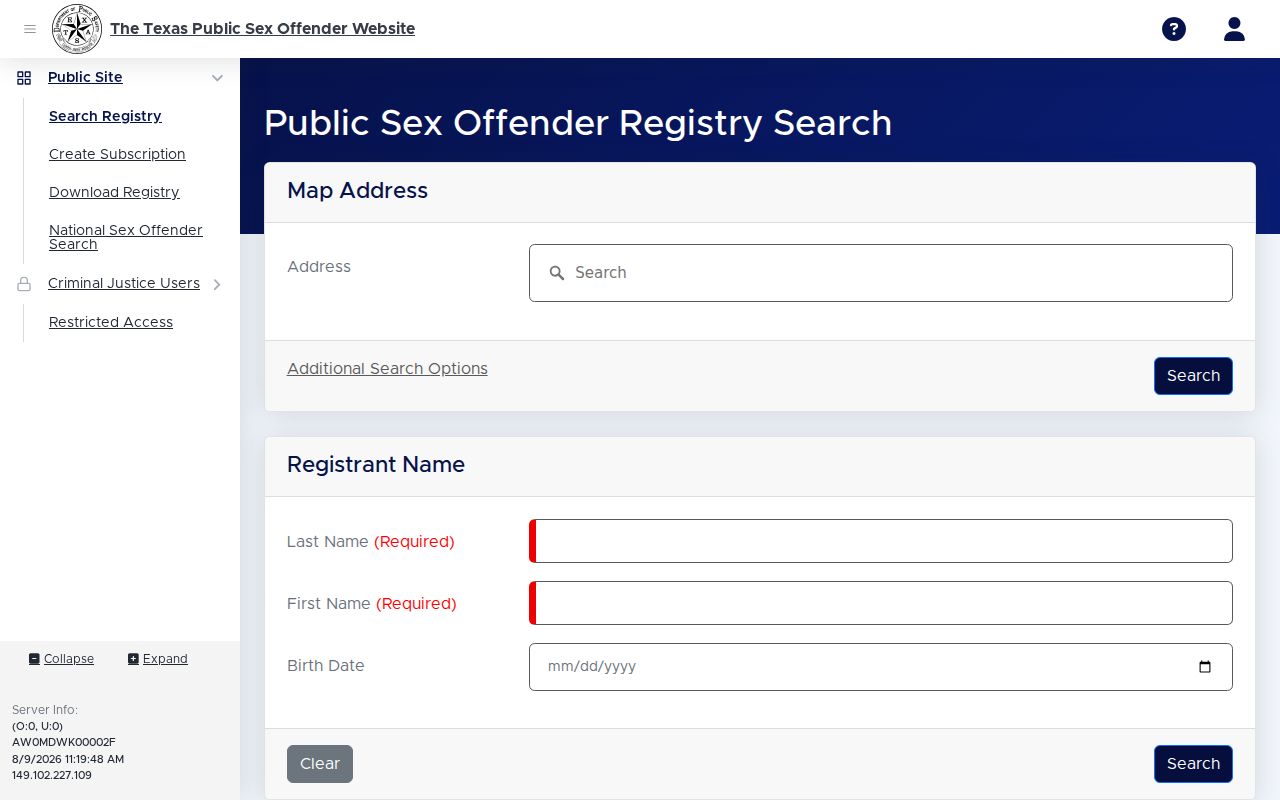
The layout groups details that should be compared together. For Gonzales County searches, verification status and registering authority are as important as the displayed address.
Verify Gonzales County Registry Details
A profile's verification date shows when the local authority last recorded a required check, not a promise that every fact changed in real time. Moves, corrections, and agency transmission can create a gap between a reported event and the public display. That is why the Gonzales County local disclaimer deserves real weight. A reader who sees a material mismatch should save the profile URL or identifying details, note the field at issue, and contact the registering authority.
Suspected noncompliance is a law-enforcement matter. Outside a municipality, the Gonzales County sheriff is the local route. Inside a city, the police department has the first local role. DPS can address the statewide display. Give the office enough detail to locate the entry, but do not publish the discrepancy or use it as a reason to approach a registrant or household. The agency can decide whether the matter reflects a lag, an error, or a report that requires action.
Registration Levels and Duties in Texas
Texas uses risk levels 1, 2, and 3 for notification assessment. Those numbers are not federal SORNA tiers, and they do not set registration length by themselves. Duration turns on the reportable offense and the rules in Code of Criminal Procedure Chapter 62. Many listed sexually violent or enumerated offenses carry a lifetime duty. Other reportable convictions generally use a period ending on the later of ten years after release from a penal institution or discharge from supervision, subject to statutory exceptions.
| Texas Designation | Public / Notification Significance | Duration Rule |
|---|---|---|
| Level 1 | Low assessed danger and lower notification assessment | Not set by level; consult Article 62.101 and the offense. |
| Level 2 | Moderate danger and an intermediate notification assessment | Not set by level; the reportable offense controls. |
| Level 3 | High assessed danger with greater community-notification relevance | Not set by level; the reportable offense controls. |
| Civilly Committed SVP | Separate high-risk status with DPS postcard and community notice | Underlying registration duty is usually lifetime. |
Certain juvenile adjudications use a ten-year framework after disposition or release, but Chapter 62 exceptions still matter. Verification duties also depend on the specific registration category and legal status. Do not infer a person's end date or check-in schedule from risk level alone. Use the profile, the controlling offense, and the registering authority for the individual duty.
Beyond Gonzales County Registry Searches
A county filter answers a local question at one point in time. It does not search every state where a person may have lived, worked, or attended school. The U.S. Department of Justice operates the National Sex Offender Public Website, which sends a search across participating public state, territorial, and tribal registries. NSOPW is the right added layer when a name or safety concern crosses the Texas line.
The national search interface shows how a cross-state query differs from a Gonzales County-only check.
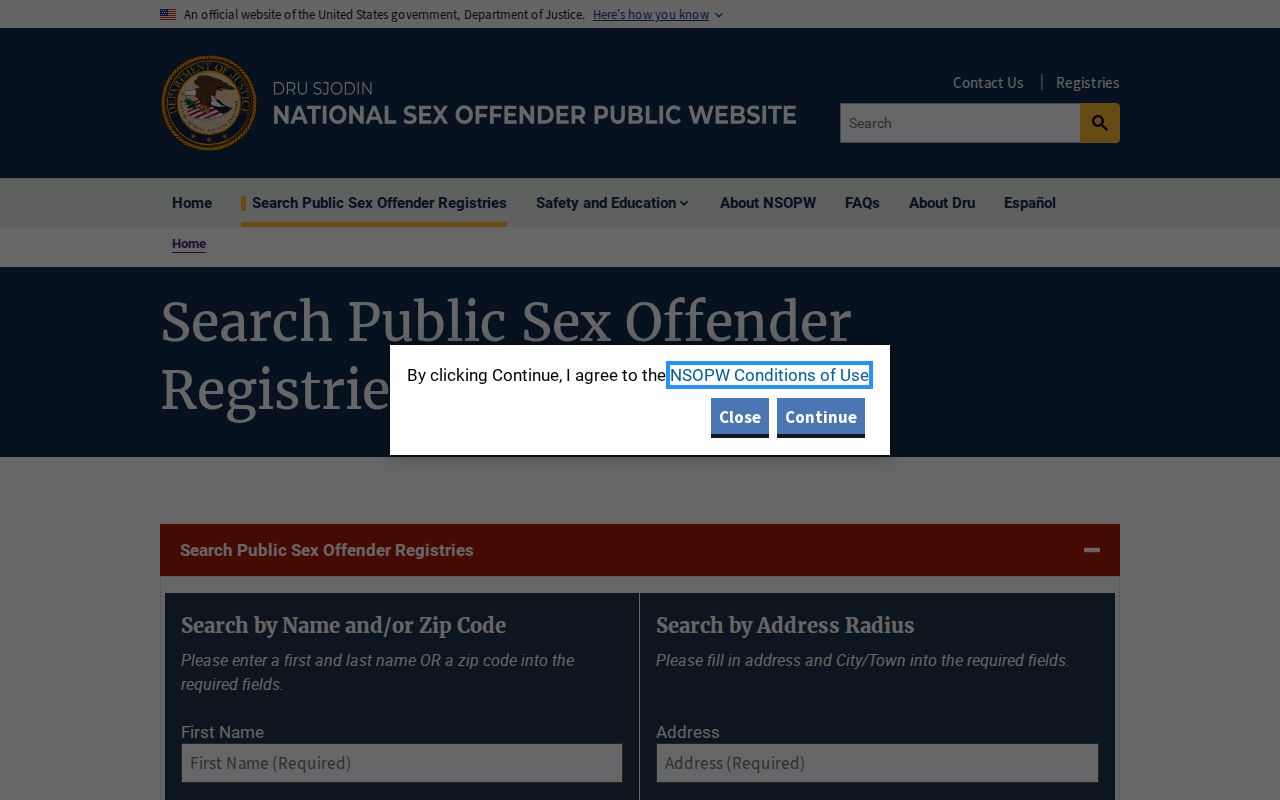
Use NSOPW to broaden coverage, then open the source registry profile returned by the search. The originating jurisdiction supplies the current public detail and its own definitions. A no-result response from one system may reflect spelling, aliases, participation, geography, or legal publication rules. It is not proof that no public registration exists anywhere.
Gonzales County Registry Move Notices
Chapter 62 provides public-notification tools beyond an ordinary search. Texas describes postcard and community notice for certain high-risk or civilly committed moves. Notices may go in English and Spanish to homes and businesses in the immediate community, and local authorities may notify schools when the law requires it. These measures are tied to statutory status and a reported move, so not every Gonzales County profile produces the same notice.
Community notice is a prompt for calm safety planning. Confirm the official profile, review the stated status, and use the local police or sheriff for a concrete concern. The registry does not replace an emergency call, and it should never prompt direct contact. If the concern extends past Texas, repeat the search through NSOPW and follow the source jurisdiction's public instructions.
Using Registry Information Lawfully
Public registry data supports awareness, personal safety, and informed contact with law enforcement. It does not authorize punishment by private citizens. Addresses can lag, similar names can mislead, and a household may include people who are not registrants. Check the official profile, note its date, and direct a real concern to the Gonzales County sheriff, the correct city police department, or DPS. Never confront a listed person or anyone at the reported address.
Chapter 62 misuse warning: Texas registry information may not be used to harass, threaten, or commit a crime. Misuse can itself lead to criminal consequences. Use the Chapter 62 registry statute and official law-enforcement channels, not vigilantism.
When the concern is a possible reporting violation, pass the exact public discrepancy to the responsible office. For an unincorporated Gonzales County address, the Gonzales County Sheriff's Office main number is 830-672-6524. Within a city, start with that police department. DPS maintains the statewide display and explains the Texas registration program. These channels let trained staff check information that is not part of the public profile.